- Home
-

- Blog
-
- News and Industry Updates
-
- ChatGPT Pulse & Meta Vibes: AI Takes Over Daily Marketing
ChatGPT Pulse & Meta Vibes: AI Takes Over Daily Marketing
Key Takeaways
-
AI is becoming operational, not experimental: ChatGPT Pulse and Meta’s Vibes show AI moving into core workflows, guiding how teams plan, create and distribute campaigns.
-
Creative agility is now standard: Image swap, product data versions and duplication tools make refreshing, testing and relaunching ads faster and easier.
-
Search and shopping are converging: Google’s Shopping campaigns now include Search, which makes feed quality and structure more critical than ever.
-
Trust and transparency are rising in value: From Google spam updates to Meta catalogue refinements, credibility is becoming central to visibility and performance.
-
Efficiency is the common thread: Every update reduces friction and lets marketers spend less time on manual tasks and more on strategy.
-
AI and automation are at the centre of this month’s most significant platform changes, and it’s clear there is a push toward efficiency. Platforms are removing friction from campaign setup, making creative refreshes faster and keeping social media ads adaptable in fast-moving feeds. These shifts point to an ecosystem where marketers can spend less time on manual builds and more time guiding strategy as automation takes on execution.
#1 OpenAI Debuts ChatGPT Pulse for Smarter Daily Briefs

ChatGPT Pulse is OpenAI’s new feature for generating AI-powered daily briefs that summarise the most relevant updates across the topics you follow. Instead of manually checking dashboards or scrolling through feeds, Pulse delivers a centralised update directly inside ChatGPT.
Beyond convenience, Pulse stands out for its integration potential. When connected with third-party apps and analytics platforms, it can pull in live data and package it into concise reports. This adds efficiency to digital marketing workflows, and paired with strategies like AI SEO, shows how automation is shifting from background support to the centre of campaign planning.
The Gurus’ take
This release shows how AI marketing tools are evolving into decision-making partners rather than just assistants. Pulse acts like a daily analyst, surfacing the information that matters most and reducing the lag between data collection and action.
The bigger shift here is alignment, with digital marketing teams no longer needing to rely on fragmented reports or wait for manual updates. Instead, AI SEO insights, campaign metrics and competitor signals can all be delivered in near real time. That creates a shared source of truth for marketers, allowing creative, media and strategy teams to stay aligned on what’s working and what needs immediate adjustment.
Your action plan
Here’s how to prepare for Pulse-style workflows:
- Integrate your tools early: As integrations become available, connect campaign platforms, analytics software and CRM tools. This allows Pulse briefs to pull both external trends and first-party data into one place.
- Prioritise what matters most: Define key focus areas, such as campaign ROI, SEO rankings or competitor activity. A less cluttered feed helps your team act on insights that directly impact business outcomes.
- Make it part of the workflow: Treat Pulse like a standing agenda item. Use daily briefs in morning standups or weave them into weekly planning sessions, so everyone starts with the same insights and decisions move faster.
- Validate before you trust it fully: Compare Pulse summaries with traditional dashboards or raw data. This lets you confirm accuracy, refine how you use the tool and identify where automation can take over repetitive reporting without risking blind spots.
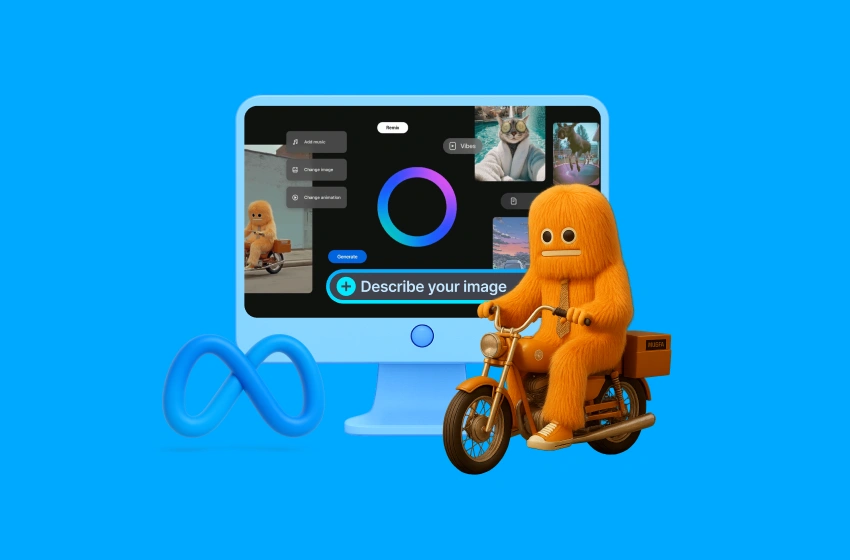
#2 Meta Introduces Vibes: AI-Powered Video Creation + Discovery

Meta has launched Vibes, a new AI-powered tool for video creation and content discovery. The platform uses generative AI to help users create short-form videos quickly, while also suggesting trending sounds, visuals and formats to match current audience interests. It’s positioned to make video production more accessible by reducing the time and resources needed to create polished, platform-ready content.
Alongside video creation, Vibes includes a discovery component that pushes videos into more personalised feeds. The combined user behaviour signals with AI-driven recommendations boosts the chance that videos produced in Vibes surface in front of highly relevant audiences. Content has the potential to gain traction organically, with stronger distribution before any paid promotion is applied.
The Gurus’ take
Vibes is another sign that Meta is positioning itself as both a creative studio and a distribution engine. Streamlining video creation and tying it to discovery can help reduce friction between content production and campaign launch.
For brands that already run Facebook ads or Instagram campaigns, Vibes could become a testing ground for low-cost creative before scaling into paid formats. The bigger opportunity is cultural. You gain the ability to react to trends in real time without requiring full production resources. When used alongside YouTube ads, Vibes also gives brands a way to compare performance across platforms and refine how short-form creative is adapted for each environment.
Your action plan
Here’s how to make the most of Meta Vibes for both organic reach and paid campaigns:
- Experiment with fast-turnaround content: Use Vibes to produce lightweight videos that align with trending topics or formats. Test them organically before committing ad spend.
- Leverage AI suggestions: Take advantage of Meta’s recommended sounds, styles and templates to reduce trial and error in production. Tap into formats the algorithm already favours.
- Build a creative pipeline: Incorporate Vibes into your content calendar as a source of frequent low-cost assets. This minimises reliance on large production cycles.
- Track discovery performance: Monitor which Vibes-generated videos gain organic traction, then use those insights to guide which assets to amplify with Facebook ads or Instagram promotions.
- Iterate quickly: Rotate new Vibes content weekly to maintain freshness and test variations. Over time, this can help you establish benchmarks for what creative consistently drives engagement.
#3 Google Standard Shopping Campaigns Must Include Search
![Google Shopping campaign setup screen showing products listed in ads now appearing across Shopping and Search results.]](https://www.onlinemarketinggurus.com.au/wp-content/uploads/2025/10/google-standard-shopping-campaigns-must-include-search-1024x576.webp)
Google is changing how Standard Shopping campaigns work: all of them will now include Search inventory by default. Advertisers can no longer limit campaigns to Shopping-only placements, which means every Google Shopping campaign will extend into Search results, combining product listings with keyword-driven intent.
The shift is part of Google’s broader push to unify Shopping and Search. Merging the two increases product visibility in places where users are already comparing and buying. The trade-off is that feed quality and campaign structure become more critical than ever. Weak product data could now lead to wasted impressions in highly competitive search environments.
The Gurus’ take
Google Shopping becomes less of an isolated channel and more of a default extension of Search with this update. It’s a double-edged sword of opportunity and risk for brands. On the side, you capture additional high-intent traffic without building separate Search campaigns. On the other side, weaker feeds or poorly structured campaigns could waste budget in competitive SERPs. The new rule essentially blurs the line between Shopping and Search. Advertisers must approach Shopping campaigns with the same level of optimisation and intent-matching they bring to keyword-driven campaigns.
Your action plan
Steps to adapt your Google Shopping campaigns under the new structure include:
- Audit product feeds: Review all titles, description, and attributes for accuracy and keyword alignment. Stronger feeds not only improve Shopping visibility but also help your listings match the right search intent when they appear in Search results.
- Refine campaign structure: Break Google Shopping campaigns into logical groups by category, margin or performance tier. This lets you control bidding more precisely, avoid budget dilution and keep high-value products from competing with lower performers.
- Monitor search queries closely: Use the Search Terms report to see which queries are triggering your Shopping ads. Add negative keywords to filter out irrelevant clicks and focus spend on queries with higher purchase intent.
- Align budgets with intent: Reallocate budget toward products and categories that consistently convert in Search-driven placements. This prevents overspending on items that generate impressions but don’t lead to sales.
- Test bidding strategies: Compare smart bidding with manual approaches in controlled campaigns. Automated bidding may help scale across blended placements, but manual control can protect margins in highly competitive categories.
#4 Meta Rolls Out Product Data Versions to Refine Ads
![Meta Commerce Manager dashboard displaying multiple product data variations for Facebook ads and catalogue campaigns.]](https://www.onlinemarketinggurus.com.au/wp-content/uploads/2025/10/meta-rolls-out-product-data-versions-to-refine-ads-1024x576.webp)
Meta is rolling out product data versions in Commerce Manager, which gives advertisers the ability to manage multiple variations of product information within a single feed. Attributes like titles, descriptions or ad images can now be tailored for specific campaigns, audiences or regions without duplicating the entire catalogue. For Facebook ads and catalogue-driven campaigns, there’s more flexibility to refine messaging while maintaining a centralised feed.
The move brings Meta’s ad ecosystem closer to established marketplace practices on platforms like Google Shopping and Amazon, where adjusting product information to context is standard. Meta lowers operational friction and makes catalogue campaigns easier to scale with precision by embedding this directly into Commerce Manager.
The Gurus’ take
This feature gives advertisers more granular control over how products are presented without adding operational overhead. Instead of being stuck with one static feed, brands can run multiple data versions that better align with campaign objectives, whether that’s highlighting discounts, localising for specific markets or emphasising unique selling points. It’s a meaningful upgrade for brands investing heavily in social media ads, where creative and contextual alignment can make or break performance.
Your action plan
To take advantage of Meta’s new product data versions, focus on building variations that align with audience needs and campaign objectives:
- Set up variations by market or season: Create tailored versions of product data that reflect regional preferences, seasonal trends or promotional events. For example, highlight winter styles in colder regions while showcasing summer collections elsewhere, or adjust product titles to reflect seasonal promotions like “Back-to-School Sale.”
- Test messaging impact: Run campaigns with different product titles or descriptions to see which versions drive stronger click-throughs and conversions. Comparing “Free Shipping Available” versus “30% Off Today” in product titles can help pinpoint which benefits resonate most with your audience.
- Simplify feed management: Instead of juggling multiple catalogues, use data versions to manage all variations from one central feed. This reduces operational complexity for teams handling large inventories and ensures consistency across campaigns.
- Align creative and product data: Match ad visuals with the product version being promoted. If you’re running a “holiday sale” feed, pair it with creative assets that reflect the same seasonal messaging to reinforce consistency and drive better engagement.
- Track performance by version: Analyse campaign results at the version level to see which adjustments deliver the strongest ROI. Use these insights to refine future product feeds and standardise best-performing variations for long-term campaigns.
#5 Meta Ads Adds Image Swap to Refresh Selling Points

Refreshing ad creatives just got easier with Meta’s new image swap feature. Advertisers can replace product images in active campaigns without tearing down and rebuilding the ad. That flexibility makes it possible to update seasonal visuals, showcase new product angles or quickly test which images resonate best. The update also preserves campaign continuity. Advertisers can change ad images without disrupting optimisation cycles.
The Gurus’ take
This addition addresses one of the long-standing pain points in Facebook ads management: the time and efficiency lost when swapping creatives. With image swap, brands gain flexibility to highlight new selling points or adapt to trends without sacrificing optimisation data. It essentially makes A/B testing more seamless by allowing advertisers to update content in line with performance signals, rather than waiting for the next campaign cycle. For industries where visuals drive decision-making, such as retail and fashion, this tool adds measurable value.
Your action plan
To make the most of Meta’s image swap feature, build it into your creative testing and refresh strategy:
- Update seasonally: Rotate in images that reflect seasonal trends, holidays or cultural moments. This keeps ads relevant without forcing you to rebuild campaigns, helping maximise efficiency during high-demand periods.
- Highlight selling points dynamically: Use image swap to showcase different product features or angles. For example, highlight durability in one image and style in another, depending on the audience segment or promotion.
- Test creative variations systematically: Introduce multiple image options into your campaigns and track engagement metrics such as CTR, CPC and conversion rate. Document results to build a library of proven visuals for future ads.
- Maintain momentum during optimisation: Instead of starting from scratch, update images within live campaigns so you preserve learning data. This ensures your ads continue performing while you refine visuals.
- Streamline creative workflows: Incorporate image swap into your standard campaign refresh process. This allows creative teams to push updates faster and ensures performance teams can react to signals like declining CTR without delay.
#6 Meta Simplifies Campaign Builds With Performance Duplication

Launching campaigns on Meta is getting easier with the rollout of performance duplication. The tool lets advertisers copy existing campaigns, ad sets or ads while retaining performance insights and optimisation data. Instead of rebuilding from the ground up, you can replicate winning structures and keep the momentum going.
The feature is especially valuable for brands running multiple social media ads at scale. It removes unnecessary setup time, reduces human error and gives marketers a faster way to adapt proven campaigns for new audiences, offers or creative tests.
The Gurus’ take
Performance duplication helps solve the tension between speed and stability. By carrying over optimisation data, it reduces the risk of performance dips that typically come with new builds. Brands running frequent promotions or managing large product catalogues will find it easier to maintain consistency while still experimenting. If you’re balancing multiple campaigns, this digital marketing update represents a more agile approach to campaign management.
Your action plan
To fold performance duplication into your Meta workflows:
- Clone proven campaigns: Identify top-performing campaigns and use them as templates when expanding into new markets or testing additional creative. This ensures new campaigns start with a strong foundation rather than from scratch.
- Preserve optimisation data: Since duplicated campaigns carry over learning signals, scaling becomes smoother. Retaining this history helps stabilise delivery and reduces the adjustment period normally required for fresh builds.
- Adapt quickly for new audiences: Replicate existing structures and simply swap out targeting parameters to launch into new audience segments. This cuts down on repetitive setup tasks while maintaining campaign consistency.
- Streamline promotional cycles: For recurring sales or seasonal pushes, duplicate past campaigns and update only the creative elements or offers. This accelerates time to launch and allows quick comparisons between cycles.
- Standardise workflows: Make duplication part of your internal playbook. Document best practices, so teams can replicate successful structures consistently.
#7 Google Finishes Rollout of August 2025 Spam Update

The August 2025 Spam Update is now fully live, tightening Google’s filters against low-quality and manipulative content. The update zeroes in on tactics like auto-generated pages, thin content and link schemes designed to artificially inflate rankings. The goal is to push unhelpful results down while giving more visibility to content that delivers genuine value.
Websites built on quick-win SEO tricks are the most likely to feel the impact. Those investing in original authoritative content stand to gain, especially as Google continues refining results to prioritise trust, depth and user experience.
The Gurus’ take
This rollout reinforces a trend that’s been building for years. Search visibility now hinges on credibility rather than loopholes. Sites relying on volume-driven tactics without substance are at risk, while well-structured content backed by expertise has more room to climb. In a landscape shaped by constant algorithm changes and Google Ads updates, the brands that consistently invest in quality content marketing are the ones most likely to maintain stable results.
Your action plan
To keep your site aligned with Google’s evolving standards, focus on strengthening the fundamentals of SEO and content quality:
- Audit existing content: Go through your site to identify thin, duplicate or auto-generated pages. Instead of leaving weak pages to drag down performance, either improve them with richer content or remove them entirely. This prevents Google from associating your domain with low-value material.
- Strengthen authority signals: Prioritise creating original, in-depth resources that show expertise in your industry. Long-form guides, research-driven posts and content written by subject-matter experts send strong trust signals to Google while answering user needs comprehensively.
- Clean up backlinks: Run backlink audits to pinpoint spammy or irrelevant links pointing to your domain. Disavow toxic links and focus on building natural, high-quality backlinks from reputable sources.
- Monitor traffic changes: Keep a close eye on organic traffic and keyword rankings over the next several weeks. Pay attention to sudden dips in specific sections of your site, as they may indicate where Google has flagged issues under the update.
- Invest in long-term SEO practices: Move away from short-term hacks and build a strategy rooted in sustainable practices. This includes publishing quality content consistently, maintaining strong technical SEO, and creating a user experience that keeps visitors engaged and returning.
Platforms Double Down on Automation and Credibility
The latest updates from OpenAI, Meta, and Google highlight how much of the digital marketing landscape is being reshaped by AI, automation and tighter platform integrations. Pulse puts real-time insights at the centre of workflows, Vibes makes video creation and discovery more accessible and Google continues to blur the lines between Shopping and Search. On the Meta side, tools like product data versions, image swap, and performance duplication all point to faster, more flexible campaign management. Layered on top of that is Google’s August 2025 Spam Update, which reinforces the importance of content quality and sustainable SEO.
Taken together, these changes show that platforms are doubling down on efficiency and transparency while raising the bar for creativity and credibility. The challenge is less about keeping up with each update and more about applying them strategically so they deliver measurable impact across campaigns.
Keep Up With Digital Marketing Updates With OMG
We’ve worked with brands that hesitate to put effort into platforms like Snapchat because they see it as too playful or too niche. But numbers like a trillion selfies show that this playfulness is exactly the point. The platform thrives because people feel comfortable experimenting and expressing themselves visually. That’s a signal worth paying attention to, especially if your audience skews younger.
These behaviours spill over into the broader culture. The filters and formats that trend on Snapchat often set the tone for what appears later on Instagram, TikTok or even mainstream advertising. If your digital marketing strategy is to only look at the bigger platforms, you risk being late to the party.
Your action plan
- Treat Snapchat’s selfie culture as a barometer for wider social media trends.
- Encourage your digital marketing team to track creative formats that emerge here first.
- Experiment with AR filters or branded lenses to meet audiences in their comfort zone.
- Repurpose insights from Snapchat into strategies for TikTok, Instagram and other visual platforms.
- Keep campaigns light and playful, as Snapchat users reward authenticity over polish.
- Analyse engagement metrics to understand how interactive content drives behaviour.
From Headlines to Hard Results
Platform shifts come quickly, but the advantage belongs to the businesses that act on them. From optimising a Google Shopping campaign to scaling social media ads, or refining visibility with long-term SEO strategies, every update is a chance to sharpen performance.
At Online Marketing Gurus, we track the latest digital marketing updates, test them in-market and build them into strategies that deliver ROI. Our team covers everything from AI SEO and paid search to Facebook ads and video creation campaigns, so you can focus on results instead of chasing platform changes.
Get in touch with OMG today and put the latest updates to work in your marketing strategy.

About the Author
Andrew Raso
Share