- Home
-

- Blog
-
- News and Industry Updates
-
- From Gemini in Chrome to Sora 2: The Next Phase of Everyday AI
From Gemini in Chrome to Sora 2: The Next Phase of Everyday AI
Key Takeaways
-
AI is redefining digital experiences, with Google Chrome, OpenAI and Perplexity all launching tools that blend productivity and instant answers.
-
Social platforms are rolling out smarter advertising features, including TikTok’s Travel Ads and LinkedIn’s new AI-driven tools for small businesses.
-
OpenAI’s Sora 2 model is making high-quality AI videos accessible, changing how creators and brands produce visual content.
-
Google Analytics now connects Meta and TikTok Ads data in one view, simplifying cross-channel performance tracking.
-
LinkedIn continues to refine its ad ecosystem with updated naming and clearer workflows that align with other major platforms.
Artificial intelligence took centre stage this week, with tech giants racing to redefine how people browse, shop and advertise online. Google, OpenAI and Perplexity all unveiled new tools that make everyday tasks smarter and faster, while LinkedIn and TikTok introduced features designed to streamline advertising and boost performance.
Here’s what marketers need to know about the updates shaping the next phase of digital innovation:
#1 Chrome’s New AI Features (Gemini In Chrome)

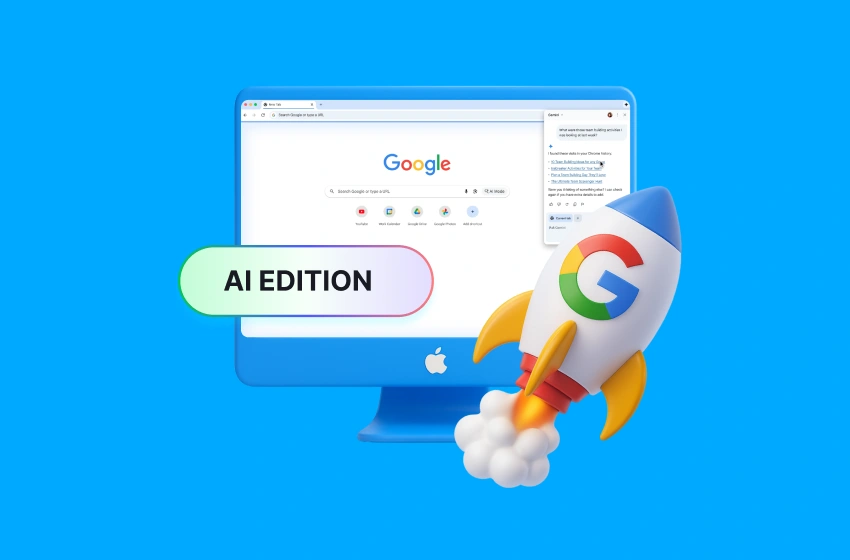
Google has introduced Gemini AI to the Chrome Browser, marking one of its biggest upgrades yet. Gemini transforms Chrome from a simple browsing tool into an intelligent assistant that helps users understand complex information, manage multiple tabs, recall past pages and stay protected from scams.
Gemini is now live for Mac and Windows users, with mobile access coming soon. It can summarise content across several tabs to simplify research and planning, recall previously visited websites through natural prompts and integrate with Google apps like Calendar, Maps and YouTube so you can take action without leaving your browser. Chrome’s new AI Mode in the address bar also allows users to ask detailed questions and receive quick, contextual answers alongside what they’re viewing.
Security has also evolved. The built-in Gemini Nano detects scams, spam notifications and malicious sites in real time, while Chrome’s password agent can change compromised passwords instantly on supported platforms such as Spotify or H&M. Soon, Gemini will even perform routine tasks like booking appointments or ordering online, giving users a safer, more productive browsing experience.
The Gurus’ take
Gemini in the Chrome Browser signals a major shift in how people interact with the web. Smarter browsing, integrated productivity and stronger security make it a key step in Google’s AI evolution. For marketers, this move reinforces the need to optimise digital content for AI-driven discovery and in-browser interaction.
Your action plan
- Prioritise efficiency: Use Gemini’s summarisation and recall tools to condense research and quickly access past references, saving time across multiple tabs.
- Test AI Mode visibility: Experiment with Chrome’s AI Mode to see how your website content performs in conversational search results.
- Maintain trust signals: Strengthen your site’s credibility and technical health to align with Chrome’s AI safety and quality preferences.
- Prepare for automation: Keep up with Chrome’s agentic browsing updates to understand how AI-driven task completion could change user behaviour.
- Partner strategically: Work with a digital marketing expert to adapt your content strategy for the AI-powered browsing era.
#2 OpenAI Launches Instant Checkout In ChatGPT

OpenAI has unveiled Instant Checkout in ChatGPT, introducing a new way for users to shop directly through conversations. Starting with U.S. Etsy sellers and expanding soon to Shopify, this feature allows users to discover and buy products without leaving ChatGPT. The system is powered by the Agentic Commerce Protocol, developed in collaboration with Stripe, which securely connects AI agents, users and businesses in a streamlined purchase process.
With Instant Checkout, users can ask ChatGPT for product recommendations, receive relevant options ranked by availability, quality and price and complete their purchase using saved payment methods. The experience mirrors an AI shopping assistant, providing convenience and trust without external redirects or sponsored results. Merchants still handle orders, shipping and customer service, while ChatGPT acts as a secure intermediary.
The Agentic Commerce Protocol is central to this innovation. It’s an open standard that enables merchants to maintain control of transactions and customer relationships while allowing AI agents to process purchases safely. Stripe users can enable these agentic payments with minimal setup, and other payment processors can connect through Stripe’s Shared Payment Token API or Delegated Payments Spec. This flexibility ensures that AI shopping can scale across different platforms without disrupting existing systems.
Security and transparency are key to the rollout. Each purchase requires explicit user confirmation, and payments are protected through encrypted tokens authorised only for the specified transaction. This approach minimises data sharing and ensures users remain in full control of their spending and privacy.
Industry partners, including Stripe, are calling the launch a major leap in AI-powered commerce infrastructure. OpenAI is open-sourcing the Agentic Commerce Protocol to encourage wider adoption among developers and merchants, signalling an ambitious move towards a future where AI becomes a seamless part of product discovery, selection and checkout.
The Gurus’ take
This move could mark ChatGPT’s evolution from a conversational assistant into a true commerce platform. By merging natural language understanding with secure payment systems, OpenAI positions ChatGPT at the centre of AI shopping innovation. It’s a preview of how everyday online transactions could soon evolve from manual browsing to AI-guided purchasing powered by user intent and context.
Your action plan
- Explore AI commerce use cases: Consider how conversational commerce could enhance user experiences and lead generation strategies.
- Evaluate merchant readiness: Review how your brand’s eCommerce systems align with open standards like the Agentic Commerce Protocol.
- Prepare content for discovery: Optimise product data and descriptions so AI assistants can surface your items accurately during conversational searches.
- Monitor AI shopping trends: Track how features like Instant Checkout influence buyer expectations and the broader digital commerce landscape.
#3 LinkedIn Adds AI Tools For Small Business Ads

LinkedIn has rolled out new AI-powered tools designed to make LinkedIn Advertising easier for small businesses. These updates simplify audience targeting, ad creation and campaign optimisation so smaller teams can achieve professional results without needing a full marketing department.
The new Auto-Targeting feature helps advertisers quickly build high-value audiences using simple inputs such as URLs, conversion lists or target industries. LinkedIn’s professional data then refines targeting automatically, ensuring campaigns reach the right decision-makers faster. This reduces setup time and improves engagement by using LinkedIn’s network intelligence to match ads with relevant professionals.
Draft with AI streamlines ad creation by generating headlines, text and image suggestions based on brand assets, Shutterstock visuals or uploaded content. According to LinkedIn, campaigns that include five or more AI-generated ad variants can see up to a 20% lift in click-through rates. Canva and Adobe Express integrations add further flexibility, offering ready-made templates for image, video and carousel ads that can be quickly designed and published without design experience.
Optimisation has also been simplified. Enhanced Recommendations now provides real-time, data-driven advice for improving performance. Business owners can test suggested updates on smaller groups before applying them platform-wide, ensuring better accuracy and control. Combined, these new tools give small businesses a clearer path to high-performing campaigns that can be launched in under an hour.
The Gurus’ take
This update makes LinkedIn Advertising more accessible and efficient for small teams. The ability to auto-target ideal audiences, generate ad copy with AI and design visuals within the same workflow saves time while improving campaign quality. It’s another sign that LinkedIn is evolving from a networking platform into a complete marketing ecosystem. For small businesses, it means better results with fewer resources and faster execution.
Your action plan
- Accelerate setup: Use Auto-Targeting to build focused audiences based on website data or customer lists, reducing manual segmentation time.
- Speed up content creation: Leverage Draft with AI and creative integrations to produce multiple ad variants that can boost CTR and test messaging quickly.
- Design smarter: Use Canva or Adobe Express templates to create polished, brand-consistent visuals without design expertise.
- Maximise impact: Partner with a LinkedIn Advertising expert to scale these AI-driven efficiencies into long-term growth.
#4 TikTok Launches Travel Ads

TikTok has introduced Travel Ads, a new suite of ad formats designed to help travel brands reach users actively exploring trip ideas and turn their travel inspiration into bookings. With more than 80% of users engaging with travel content monthly, this update positions TikTok as a major platform for travel discovery and conversion.
Powered by TikTok’s Smart+ system, Travel Ads use AI and intent-based targeting to match high-intent audiences with the right offers for flights, hotels and destinations. The platform’s optimisation model identifies users ready to book and serves them relevant, visually rich ads that encourage immediate action.
Each Travel Ad includes clickable travel cards that display key details such as hotel names, flight prices and discounts. These cards appear automatically as the video plays, keeping users informed without interrupting engagement. Three ad formats are available: Single Video, which features up to 10 auto-sliding cards; Catalog Video, which links to a single product; and Carousel, which showcases multiple offers through swipeable images and continuous music for a more immersive experience.
Travel Ads are designed to make TikTok advertising more efficient for tourism operators, airlines and hospitality brands. Smart+ automation handles much of the setup, creative generation and delivery optimisation, allowing advertisers to focus on strategy rather than execution. By combining dynamic visuals with strong intent signals, TikTok turns casual travel browsing into real bookings, bridging the gap between inspiration and purchase.
The Gurus’ take
This launch reinforces TikTok’s growing role as a destination for discovery-led shopping and booking. Travel Ads combine AI targeting, dynamic visuals and automation to simplify campaign management while improving return on ad spend. For marketers, it’s a major opportunity to tap into audiences who are not just dreaming of travel but actively ready to book. Effective TikTok advertising now means pairing creative storytelling with data-driven targeting to capture user intent in real time.
Your action plan
- Leverage Smart+: Use TikTok’s Smart+ automation to target high-intent travellers and reduce manual optimisation work.
- Experiment with formats: Test Single Video, Catalog Video and Carousel formats to see which best suits your products or destinations.
- Highlight key details: Incorporate pricing, location and ratings into travel cards to encourage direct bookings.
- Optimise for intent: Build campaigns that move users from inspiration to action through visually engaging TikTok advertising.
- Measure and adapt: Track click-through and booking metrics to refine future campaigns and maximise performance.
#5 OpenAI Launches Sora App + Sora 2 Model

OpenAI has released the Sora app alongside Sora 2, its next-generation model for creating realistic AI videos with synchronised sound and physics. Designed to make high-quality content creation accessible to everyone, Sora 2 allows users to generate lifelike motion, dialogue and sound effects that were previously possible only through professional production tools.
Sora 2’s upgraded realism stems from its ability to simulate the physical world accurately. Actions like a ball bouncing, characters moving or clothing shifting now appear natural and consistent. It supports multiple visual styles, from cinematic to anime and can produce detailed soundscapes, speech and ambient audio.
Users can even upload short clips to insert their likeness and voice into generated scenes, opening new creative possibilities for marketers, filmmakers and social creators producing AI videos.
The new Sora app, currently available in the U.S. and Canada, serves as both a creative tool and social platform. Users can make, remix and discover content through a personalised feed and a standout feature called “cameos”, which lets people place themselves or friends into AI-generated clips after a quick verification step. The experience focuses on participation and creativity rather than passive scrolling, aiming to foster community and originality.
Safety and wellbeing are central to the rollout. OpenAI has added limits for teen users, natural language controls to customise feeds and human moderation systems to manage harmful content. Users retain full control over their likeness, with the ability to revoke cameo permissions or remove videos at any time. The platform’s design prioritises wellbeing over ad-driven engagement, with minimal monetisation and parental management options via ChatGPT.
The Gurus’ take
Sora 2 signals a new era in AI video production, combining advanced realism with user accessibility. The technology bridges entertainment, marketing and social creativity, giving small teams and creators access to cinematic tools once reserved for studios. Its platform design also sets a new standard for ethical AI content generation. For brands, this opens the door to engaging, high-quality video storytelling at scale.
Your action plan
- Experiment with creation: Test Sora 2 to generate promotional AI videos that showcase brand stories or product experiences.
- Repurpose existing assets: Use short clips or audio to create realistic cameos and extend campaign reach with minimal production time.
- Explore social potential: Consider the Sora app as an emerging content channel focused on creativity over ads.
- Prioritise ethics and control: Ensure likeness use and content permissions align with responsible AI practices.
#6 Google Analytics Now Imports Meta + TikTok Ads Data

Google Analytics 4 (GA4) has expanded its data import capabilities, now allowing marketers to bring in performance data from Meta Ads and TikTok Ads directly into one dashboard. This update lets users see ad costs, clicks and impressions from multiple platforms in a single view, eliminating the need to switch between interfaces. It’s a step forward for marketers managing multi-channel campaigns who need a full performance snapshot in one place.
The integration automatically pulls in up to 24 months of historical Meta Ads data, filling key fields such as “Ads cost”, “Ads clicks” and “Ads impressions” for paid Meta traffic. The same capability applies to TikTok Ads, ensuring both platforms’ performance data sync seamlessly with Google Analytics. To prevent duplication, users are advised to delete any existing cost imports before connecting the new data feed.
This update also strengthens GA4’s role as a central analytics hub, helping advertisers evaluate true campaign ROI across channels. The platform’s new projections and scenario planning tools complement this integration by helping teams forecast ad spend outcomes and adjust budgets more strategically. With both Meta and TikTok data in one place, cross-platform analysis and reporting become far more efficient.
The Gurus’ take
This is a major win for marketers managing campaigns across Meta, TikTok and Google. By consolidating data in GA4, teams can easily track channel performance, compare results and refine their attribution models. It streamlines reporting while giving a more accurate picture of where conversions and costs align. For brands running Facebook advertising, it’s another reason to treat GA4 as the single source of truth for campaign evaluation.
Your action plan
- Connect integrations: Link your Meta and TikTok Ads accounts in GA4 to start automatic imports of cost and click data.
- Clean up datasets: Remove any overlapping historical cost data before importing to prevent duplication.
- Use projections: Take advantage of GA4’s new scenario planning features to estimate future campaign performance and budget impact.
- Analyse across channels: Compare TikTok, Google and Facebook advertising metrics side by side to optimise spend and ROI.
- Enhance reporting: Work with a Facebook Ads expert to build unified dashboards and ensure consistent, actionable insights.
#7 LinkedIn Just Upgraded Its Ad Metrics

LinkedIn is updating its Campaign Manager to align more closely with industry standards, making ad management simpler for users. Beginning next month, “Campaign Group” will be renamed “Campaign”, and “Campaigns” will become “Ad sets”. These terminology changes are designed to improve clarity and make it easier for new advertisers to navigate the platform.
While the update doesn’t change how LinkedIn ads function, it’s an important shift for marketers familiar with the old structure. The new naming system reflects similar frameworks used on other advertising platforms, helping teams move more seamlessly between channels.
For marketers, this update means a smoother setup process and fewer barriers for those running multi-channel campaigns. It’s a small but practical improvement in how advertisers organise and report on LinkedIn ads, ensuring consistency across digital advertising tools.
The Gurus’ take
This update may seem minor, but it reflects LinkedIn’s broader effort to streamline campaign management and stay consistent with industry naming conventions. For advertisers, it’s a helpful step towards a more intuitive ad setup experience, particularly when switching between platforms.
Your action plan
- Review platform updates: Make sure your team understands the new terminology before the change goes live.
- Update internal docs: Adjust your campaign reporting templates and naming conventions to match the new structure.
- Check training materials: Ensure any internal LinkedIn advertising guides or SOPs reflect the new terms.
- Communicate with clients: Let clients know about the naming updates so they can interpret reports accurately.
#8 Perplexity Launches Comet Browser

Perplexity has officially launched Comet, a free AI browser now available worldwide for desktop users. After months on a waitlist, Comet has opened to the public, marking a significant shift in how people explore the web. Instead of returning long lists of links, the browser delivers direct, AI-powered answers to questions, encouraging a more curious and efficient way to search online.
Comet integrates the Comet Assistant into every new tab, offering real-time help with research, meetings, coding and everyday tasks. It’s designed to help users stay focused while cutting through web clutter. For professionals and students alike, this means faster, more relevant results without constant tab-switching. The assistant also supports tools like the Email Assistant, available to Max subscribers, which can schedule meetings, draft responses and manage inboxes by simply being cc’d on an email.
Another innovation is Background Assistants, which can run multiple AI processes simultaneously, helping users tackle ongoing tasks like to-do lists or project updates in the background. A mobile version with advanced voice interaction is also in development, bringing a hands-free, ad-free AI experience to mobile devices.
Comet also prioritises quality information. Through Comet Plus, Perplexity partners with reputable publishers to surface verified, high-quality journalism within its ecosystem. The goal is to combine powerful AI tools with credible content, creating a browsing experience built on trust and curiosity.
The Gurus’ Take
Comet represents a clear sign of where web browsing is headed, which is towards AI-first experiences that deliver context and clarity instantly. For marketers and content creators, it underscores the growing importance of structured, factual and AI-friendly content that can be surfaced by intelligent browsers rather than traditional search engines. As more users adopt AI browsers like Comet, visibility will depend less on ranking for links and more on being the trusted answer source.
Your Action Plan
- Explore new platforms: Test the Comet browser to understand how AI-driven answers differ from traditional search experiences.
- Optimise for AI: Create content that’s clear, verifiable and formatted for retrieval by AI browsers and assistants.
- Track emerging behaviour: Monitor how AI-led browsing affects traffic and user engagement patterns across channels.
- Align with quality: Prioritise authoritative sources and trustworthy backlinks to stay visible in answer-based ecosystems.
From AI Breakthroughs To Smarter Ads
The digital world is evolving faster than ever, and this week’s updates prove it. From Google’s Gemini-powered Chrome to OpenAI’s new Sora app and TikTok’s travel-ready ad formats, innovation is reshaping how brands connect, create and convert.
At OMG, our team of performance and AI specialists transforms emerging tools into real growth opportunities. With more than a decade of experience and 40+ industry awards, we help brands stay competitive through data-driven strategy and creative precision. From enhancing local SEO for better visibility to boosting performance with remarketing and retargeting and scaling reach through Instagram marketing, we help expand brand reach.
Curious how these updates can strengthen your marketing? Get in touch for a free strategy session and discover how OMG can help your business stay ahead in the new era of AI-powered marketing.

About the Author
Andrew Raso
Share