- Home
-

- Blog
-
- News and Industry Updates
-
- From AI Max to TikTok Search: 7 Game-Changing Updates For Marketers
From AI Max to TikTok Search: 7 Game-Changing Updates For Marketers
Key Takeaways
-
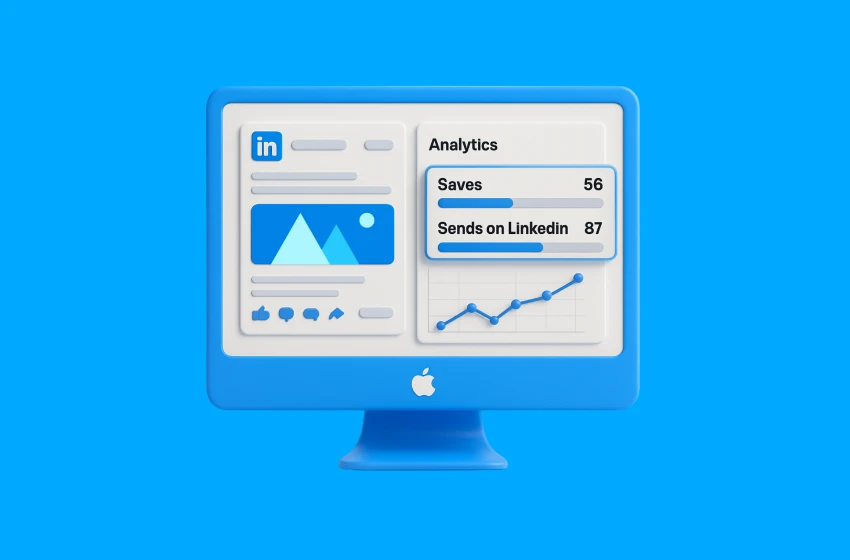
LinkedIn introduces new “Saves” and “Sends” analytics, giving brands a clearer picture of how audiences engage with and privately share content.
-
TikTok Search Marketing drives 2x purchase lift, showing how the platform is becoming a powerful channel for intent-driven discovery.
-
Google Asset Studio expands with generative AI for creative workflows and rolls out AI Max globally for campaign optimisation with brand-safe controls.
-
Performance Planner Suggested Plans speeds up forecasting, while Google retires lesser-used structured data formats to simplify search results.
-
OpenAI announces an AI-powered hiring platform launching in 2026, signalling a major shift in recruitment and workforce development.
The world of digital marketing never slows down, and this week has proven to be one of the most transformative chapters yet. From AI-powered creative workflows and global campaign optimisation tools to new trust-building features on LinkedIn and TikTok’s redefinition of search, the updates released carry major implications for how brands connect with audiences.
This blog explores the latest updates from Google, Meta, TikTok, LinkedIn and OpenAI. We’ll unpack what each change means for advertisers, outline the opportunities and provide action plans that can help your brand stay one step ahead.
#1. LinkedIn Adds Post Send and Save Insights

LinkedIn has introduced two new engagement metrics for posts: Saves and Sends. Saves records how many users bookmarked a post to revisit later. Sends measures how often a post was shared privately via direct messages on the platform.
These additions expand the platform’s reporting beyond the existing metrics of likes, comments and shares. They are designed to give page admins and content creators more detail on how content is being used by audiences. Both metrics appear in post analytics alongside other engagement data.
LinkedIn stated that the rollout is part of its ongoing updates to analytics, which have included improvements to reach, impressions and demographic reporting in recent years. Saves and Sends will be available to all users with access to post analytics, providing more granular insights into how different formats and topics are being consumed.
The Gurus’ take
Saves provides a more subtle signal of quality, capturing when an audience finds content worth revisiting. They reveal which resources, insights or frameworks offer ongoing value rather than fleeting interest. This positions Saves as a stronger measure of relevance compared to likes, which are often driven by surface-level approval.
Sends represent trust in action. When a user chooses to privately share your content with a peer, it demonstrates confidence that your material can spark useful conversation. This type of interaction rarely appears publicly but holds substantial influence, especially in B2B settings where private recommendations carry weight.
Together, Saves and Sends expand the understanding of engagement beyond vanity metrics. Brands can view these behaviours as signals of authority and utility, guiding future LinkedIn content strategies towards creating assets that are not only engaging in the moment but also enduringly valuable and shareable across private networks.
Your action plan
- Prioritise evergreen value: Create posts that serve as references, such as guides, how-tos and insights that users may want to bookmark. Posts with this type of practical longevity are more likely to circulate long after initial publication.
- Optimise shareability: Craft content with concise takeaways or quotable insights that make it natural for users to send in DMs. A shareable structure helps posts break into new circles of influence.
- Track new metrics over time: Add Saves and Sends into monthly reports to identify high-performing content styles. By monitoring shifts, you’ll spot patterns that guide future campaigns.
- Refine targeting: Use posts with strong Send/Save performance as templates for sponsored updates to similar audiences. This strategy creates a tested model for scaling reach and improving outcomes.
#2. TikTok Touts 2x Purchase Lift with Search Ads

TikTok has released new data on the performance of its Search Ads Campaigns, which were first introduced in 2024. According to the company, advertisers running Search Ads in TikTok saw a 2x higher purchase lift overall compared to those relying only on feed-based placements.
The study highlighted particularly strong outcomes for enterprise advertisers, with results showing even higher purchase lift in larger accounts. TikTok also pointed out that search behaviour on the platform is continuing to grow, with a significant portion of Gen Z users now using TikTok as part of their weekly search habits.
Search Ads appear in TikTok’s search results and are designed to capture high-intent queries. By complementing feed-based discovery, the format gives advertisers the ability to engage users who are actively seeking information, products or services.
The Gurus’ take
TikTok has matured into a platform where search behaviour is tied directly to action. Users enter queries with intent, and when paired with ads that mirror community-driven content, conversion rates rise significantly. This shift elevates TikTok from an awareness-only channel into one that drives measurable performance.
Beyond immediate gains, TikTok’s evolution into a hybrid discovery-and-search engine is shaping a new form of consumer journey. Unlike traditional search platforms, TikTok blends entertainment, credibility and social context in one place. This layered experience influences not just what people buy but also how they evaluate options.
For brands, the competitive opportunity lies in early adoption of TikTok Search Marketing before they reach saturation. Those who refine keyword strategies, creative formats and targeting now will build an advantage as the platform becomes increasingly crowded with advertisers seeking intent-driven audiences.
Your action plan
- Experiment with keywords: Build TikTok-specific keyword strategies that reflect cultural phrases, trending language and niche topics. This ensures your brand stays in step with the way younger audiences phrase questions.
- Blend performance with storytelling: Ensure your creatives align with TikTok’s native tone while still capturing high-intent queries. The right balance of utility and relatability increases conversions.
- Measure incremental lift: Run controlled tests to compare results between Feed Ads and Search Ads, quantifying incremental ROI. This gives you concrete proof of the added value search placements bring.
- Leverage Gen Z search trends: Monitor how younger audiences phrase searches and adapt campaigns to mirror their conversational style. Adjusting language ensures campaigns feel natural and trustworthy.
#3. Google’s Asset Studio Brings Generative AI to Creative Workflows

Google has expanded the capabilities of Asset Studio within Google Ads. The platform now supports AI-generated images, bulk image transformation, style reference application and automated video creation using text and images.
The updates are powered by Google’s Imagen 4 model, which the company says improves the quality of generated visuals. Marketers can use Asset Studio to create lifestyle imagery from product shots, refresh ads in batches and build quick variations for testing. These features enhance the suite of Google Ads creative tools available to advertisers.
In addition to creation features, Google has introduced options to share assets and previews for review. This allows teams to circulate drafts for feedback before publishing campaigns.
The Gurus’ take
Asset Studio reduces the traditional pain points in creative production. By using AI to generate images, videos and text assets, marketers can bypass lengthy design cycles while still achieving high-quality outcomes. This is especially beneficial when campaigns demand rapid adjustments across multiple markets or audience segments.
Strategically, the tool democratises professional-grade creative. Small and mid-sized teams, often limited by budget or in-house resources, can now produce assets that rival larger competitors. This levels the playing field, shifting success factors from resource size to creativity and strategic direction.
Looking ahead, brands that embrace Asset Studio not only gain efficiency but also expand their ability to test and learn. More frequent creative variations mean faster insights into what resonates, allowing agile brands to adapt messaging and visuals in real time while slower competitors remain locked in longer production cycles.
Your action plan
- Audit creative workflows: Identify areas where AI-generated assets can replace manual production to save time. Making even small adjustments can unlock larger efficiency gains.
- Establish brand style libraries: Upload brand imagery as style references to ensure consistency across AI outputs. This safeguards visual identity while expanding capacity.
- Experiment with video generation: Start with low-stakes campaigns to evaluate how AI-produced videos perform. This allows safe experimentation before rolling out on larger campaigns.
- Set quality control processes: Review AI assets for accuracy, tone and cultural sensitivity before deployment. Structured reviews ensure alignment with brand standards.
- Test localisation potential: Use Asset Studio to adapt creative for different regions or cultural contexts. This flexibility can expand reach while preserving brand relevance.
#4. Google Expands AI Max Globally

Google has rolled out its AI Max tools globally, extending availability across Google Ads, Ads Editor, Search Ads 360 and the Google Ads API. The expansion brings one-click experiments, which allow advertisers to trial campaign strategies quickly, and new brand-safe text guidelines that direct how AI generates ad copy.
AI Max was previously limited to smaller test groups but is now available in beta to all advertisers. The tools are designed to make it easier for marketers to validate changes directly within campaign workflows, without having to build experiments separately. Advertisers can also establish text guardrails to maintain brand consistency and compliance.
According to Google, the global rollout reflects demand for tools that combine automation with more advertiser control. The company noted that AI Max capabilities will also extend into Performance Max campaigns in future updates, broadening their application across campaign types.
The Gurus’ take
AI Max marks a clear step forward in blending automation with control. The introduction of brand-safe text guidelines ensures that while AI optimises campaigns, it does not compromise brand integrity. This balance is vital for industries where tone, compliance or sensitivity matter.
On a strategic level, global expansion means businesses of all sizes can now access tools that were previously more limited. By integrating one-click experiments and scalable optimisation, AI Max allows advertisers to gather actionable insights faster, improving decision-making across multiple campaign types.
The competitive edge lies in how brands choose to use AI Max. Those who treat it as a partner will find that it frees up human teams to focus on higher-order strategy.
Companies that hesitate may find themselves overspending on manual processes while others scale with precision.
Your action plan
- Test one-click experiments: Use the built-in experiment framework to quickly evaluate AI recommendations. Testing at pace will help you determine the value of campaign automation sooner.
- Refine ad copy guidelines: Create text rules that ensure AI-generated content reflects brand values. Detailed rules help AI output stay on-brand without heavy re-editing.
- Compare against manual controls: Benchmark AI Max outcomes against existing setups to assess incremental value. Side-by-side comparisons provide evidence of where automation adds gains.
- Use selectively: Apply AI Max to campaigns where scale and optimisation are critical, while maintaining manual control for sensitive messaging. This hybrid approach ensures both control and efficiency.
- Train teams on oversight: Educate marketing staff on how to monitor and adjust AI-led campaigns. Skilled oversight ensures automation is used responsibly and effectively.
For tailored assistance, explore our Google Ads management and PPC services.
#5. Google Ads Suggested Plans Simplifies Forecasting

Google has introduced Suggested Plans within its Performance Planner tool. The new feature generates pre-built forecasts for eligible campaigns, including Search, Shopping, Performance Max and Apps.
Suggested Plans draw on historical data from an advertiser’s account to automatically simulate budget and performance scenarios. This is intended to reduce the manual effort previously required to build forecast models from scratch. Not all campaigns will be eligible, and advertisers may need to adjust structures to access the feature.
The Gurus’ take
Media buyers spend significant time building plans manually. Suggested Plans automate this process, providing a faster path to data-driven insights. For smaller brands, this unlocks forecasting that was previously too resource-heavy to pursue.
Strategically, the tool elevates how planning conversations are conducted. Instead of beginning with assumptions, teams can rely on data-backed scenarios that highlight potential outcomes. This creates a more evidence-driven foundation for investment discussions and helps prevent resource misallocation.
Competitively, brands that adopt Suggested Plans early will spend less time on manual processes and more time on interpreting insights. This efficiency creates room for deeper analysis, budget optimisation and strategic thinking, ensuring their campaigns are guided by proactive decisions rather than reactive guesswork.
Your action plan
- Check eligibility: Confirm which campaigns qualify for Suggested Plans. Eligibility checks save wasted time and ensure you only use the tool when applicable.
- Incorporate into planning: Use suggested forecasts as baselines for budget discussions. Having a clear baseline improves decision-making in cross-team meetings.
- Validate against results: Compare forecasted performance with actual outcomes to measure accuracy. Tracking differences over time refines confidence in the forecasts.
- Save time for strategy: Reallocate effort from manual planning to higher-level optimisation. Analysts can use that time to solve complex challenges and innovate.
#6. Google Simplifies Search Results by Retiring Structured Data Types

Google has announced the removal of several structured data types that are no longer widely used in Search. Formats being retired include Book Actions, Course Info, Claim Review, Estimated Salary, Learning Video, Special Announcement and Vehicle Listing.
These schema types will no longer generate rich results in Search, and related reports in Search Console are being phased out. Google stated that the change is intended to simplify how results are displayed and to focus on structured data formats that deliver clearer value to users.
The update does not affect rankings directly, but it does mean that sites using the retired formats will no longer see enhanced presentation for those elements. Google advised site owners to review their structured data and prioritise supported formats that continue to influence visibility in results.
The Gurus’ take
The removal of underused schema formats reflects Google’s goal of simplifying the search experience. By stripping back clutter, the platform ensures only the most valuable structured data continues to shape how results appear. This creates a cleaner, more predictable environment for users.
For marketers, the change highlights the importance of staying aligned with evolving search priorities. Technical SEO cannot remain static; it requires continuous auditing and adaptation. Businesses that maintain flexibility in schema strategy will avoid disruptions and sustain visibility.
From a competitive standpoint, those who proactively adjust will gain an edge over brands slower to update. Schema optimisation is subtle but powerful: a technical area where vigilance translates directly into stronger rankings and richer visibility on the results page.
Your action plan
- Review schema usage: Audit your site’s structured data to ensure compliance with active formats. This keeps your efforts aligned with current standards.
- Update reporting queries: If you’re using Search Console or BigQuery exports, modify queries to account for deprecated fields. Adjusting ensures continuity in reporting.
- Focus on high-value schema: Prioritise structured data that drives rich results, such as FAQs, Products and Events. Concentrating on high-impact areas maximises returns.
- Monitor rankings: Ensure visibility isn’t affected by the removal of less common markups. Close monitoring helps catch any declines early.
- Future-proof your approach: Stay informed about upcoming schema updates and SEO best practices and test new formats as they roll out. Proactive adoption secures long-term visibility.
To future-proof your search presence, work with our award-winning SEO agency.
#7. OpenAI Announces AI-Powered Hiring Platform

OpenAI has confirmed plans to launch a new AI-powered hiring platform in 2026. The service will match employers and candidates using AI-driven assessments and will integrate with the company’s certification arm, the OpenAI Academy.
The platform is designed to streamline hiring by combining candidate evaluation with verifiable AI-related skill certifications. OpenAI said the goal is to improve the accuracy of matches between job seekers and employers, particularly in technical fields where skill validation is critical.
In addition to the hiring platform, OpenAI plans to roll out a set of professional certifications focused on AI fluency. These programs are intended to prepare workers for roles in industries adapting to AI technologies, creating a dual offering of workforce development and recruitment tools.
The Gurus’ take
The introduction of the OpenAI Jobs Platform is a bold move that positions the company as a serious challenger in candidate matching technology. By integrating AI into recruitment, the platform seeks to address inefficiencies in traditional hiring systems where mismatches often delay placements.
Strategically, the inclusion of AI-driven certifications through the OpenAI Academy extends the platform’s influence into workforce development. This creates a dual value proposition: helping employers source talent while also equipping candidates with verifiable skills.
For brands, the competitive advantage lies in preparing for a future where AI certifications may carry significant weight in hiring. Companies that recognise and adopt these new credentials early can build talent pipelines filled with workers trained in the exact skills needed for an AI-integrated economy.
Your action plan
- Track developments: Stay updated on the OpenAI Jobs rollout and pilot opportunities. Being informed will help you plan recruitment strategies before rivals adapt.
- Consider AI certifications: Encourage employees to participate in the OpenAI Academy’s programs to boost skills. Certified staff will be better prepared for AI-integrated workflows.
- Evaluate recruitment strategy: Anticipate how new AI-driven platforms could complement or compete with LinkedIn sourcing. Adjusting sourcing strategies and employer branding ahead of time reduces disruption.
- Prepare for disruption: Factor in broader workforce changes as AI reshapes white-collar roles. Planning now positions your company as adaptable and future-focused.
- Integrate AI readiness: Begin embedding AI literacy into onboarding and training. Building familiarity early ensures your workforce evolves with technological shifts.
To adapt early, explore our Digital Strategy services.
Turn This Week’s Digital Marketing News into Growth with OMG
September 2025 was a milestone month for digital marketing innovation. From TikTok’s evolving search ecosystem to Google’s global rollout of AI-driven optimisation, these changes demand proactive adaptation.
At Online Marketing Gurus, we translate every shift into opportunities for growth. Whether you’re exploring TikTok Search Ads, refining LinkedIn strategies or evaluating AI-powered creative workflows, our team is here to help you adapt fast and build campaigns that deliver measurable ROI.
Ready to act on these updates? Reach out to Online Marketing Gurus today for a tailored strategy session.

About the Author
Andrew Raso
Share