- Home
-

- Blog
-
- News and Industry Updates
-
- Nano Banana Headlines a Week of Google and Meta Upgrades
Nano Banana Headlines a Week of Google and Meta Upgrades
Key Takeaways
-
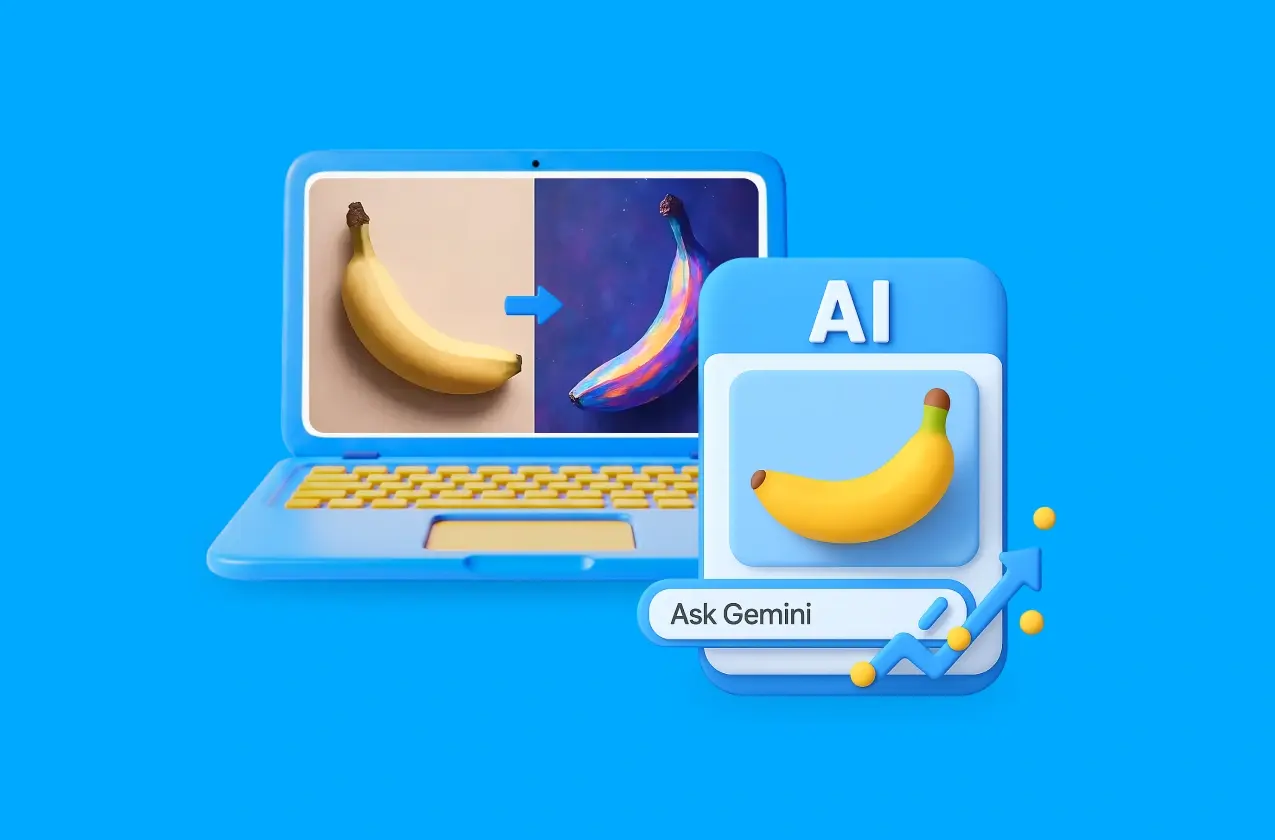
Google launched “Nano Banana” inside Gemini 2.5 Flash, an AI image editing tool focused on consistency across edits, conversational refinements and multi-image fusion.
-
Performance Max now includes an Account Level Reporting Overview, letting advertisers compare multiple PMax campaigns side by side to spot patterns and optimise budgets.
-
Google Ads and Merchant Center now feature loyalty integrations, including annotations for member-only perks and a new loyalty goal that prioritises high-value shoppers.
-
Audience exclusion controls are finally available in Shopping campaigns, helping advertisers cut wasted spend and sharpen targeting for acquisition or retention strategies.
-
Instagram is testing picture-in-picture for Reels, enabling users to keep videos playing while multitasking, which could boost viewing time and completion rates.
-
Meta added an “Instagram follows” metric to ad reporting, allowing advertisers to track follower growth from campaigns and better measure brand and creator impact.
-
Google rolled out its August 2025 spam update targeting low-quality content worldwide, with ranking volatility expected as sites relying on thin or manipulative tactics are hit.
-
Google Vids introduced AI-powered image-to-video tools using Veo 3, along with AI avatars and transcript trimming, making scalable video production more efficient.
Nano Banana Headlines a Week of Google and Meta Upgrades
September isn’t easing us in. The first week has already brought a cluster of updates from Google and Meta that will directly shape how marketers build, optimise, and measure campaigns. These aren’t surface-level improvements; they point to a deeper shift where AI is becoming more reliable, reporting more transparent, and customer engagement more measurable.
For brands heading into the busiest season of the year, understanding these changes isn’t optional. It’s the difference between adapting early or falling behind as the landscape keeps moving.
Read on for the full breakdown and see how you can turn these updates into an advantage right now:
#1. Google’s Nano Banana AI image editing tool launches in Gemini

Google has officially launched “Nano Banana,” its new AI image editing model within Gemini 2.5 Flash. First spotted in blind tests on LMArena and quickly hyped across Reddit’s AI art forums, the tool is now live in Google Gemini and Google AI Studio. It’s pitched as a breakthrough in solving one of generative AI’s biggest flaws: image consistency.
Nano Banana is designed for marketers, creatives and brands that need reliable, repeatable image outputs rather than one-off experiments. The tool claims to tackle three key areas that previously caused headaches: keeping character and style consistent across multiple edits, allowing conversational “multi-turn” refinements without derailing the image, and fusing multiple images into one cohesive visual.
For Google, this move positions Google Gemini as more than just a text AI. It’s now a serious contender in the crowded space of generative AI tools and creative optimisation platforms.
The gurus’ take
At OMG, the feature that immediately stands out is consistency. Too often, AI image editing tools distort brand assets, alter product details or subtly shift a person’s likeness across iterations. Nano Banana’s ability to preserve details across edits is a game-changer for campaigns that demand strict visual continuity, whether it’s ensuring a CEO’s headshot stays on-brand or rolling out hundreds of product variations.
That said, Nano Banana leans more toward dependability than raw artistry. Where models like GPT-5 might produce imaginative, eye-catching visuals, they often stumble on accuracy. For digital marketers, this reliability outweighs flashiness. A product mocked up in a dozen settings that actually looks like the same product is infinitely more valuable than a dazzling but inconsistent reinterpretation.
Latency is another edge. Early testing shows that Nano Banana can deliver edits in under 30 seconds, which is more than twice as fast as GPT-5 in some cases. For high-volume creative workflows, speed and predictability unlock significant efficiency gains.
Your action plan
- Audit existing workflows. Identify campaigns where visual consistency across iterations is essential (e.g. ecommerce, product launches, headshots).
- Experiment with Gemini’s Nano Banana for both simple edits and multi-turn refinements, comparing results against your current generative AI tools.
- Incorporate multi-image fusion for creative testing. Mock up brand assets in multiple scenarios without risking off-brand distortions.
- Leverage the speed advantage. Test high-volume variant production (e.g. hundreds of ad creatives) to see if Nano Banana reduces turnaround times.
- Build creative guardrails. Even with improved reliability, keep QA processes in place to catch errors before assets go live.
#2. PMax gets smarter: compare multiple campaigns

Google has rolled out a major update to Google Performance Max (PMax) reporting that makes campaign analysis faster and more transparent. Until now, advertisers could only access Channel Reporting for individual campaigns. With the new Account Level Reporting Overview, you can finally compare multiple PMax campaigns in one view.
This change means you no longer need to drill down into each campaign separately to see how different channels are contributing. Instead, you get a consolidated dashboard that shows performance patterns, conversion metrics and channel data across your entire account. While Channel Reporting is still limited to PMax, Google has hinted that other campaign types may eventually benefit from similar reporting functionality.
The gurus’ take
For OMG, this update feels long overdue. PMax has always been positioned as a full-funnel, cross-channel solution, but being forced to analyse campaigns one at a time made it harder to spot big-picture trends.
With Account Level Reporting, campaign comparison is easier since you can now see which PMax campaigns are pulling their weight across Search, Display, YouTube and other placements without jumping through multiple reporting hoops.
For marketers running high volumes of PMax activity, this means quicker insights into channel performance and easier segmentation by conversions. The ability to zoom out and identify patterns across campaigns helps with paid ads optimisation, whether that means shifting spend, adjusting creative or identifying which channels consistently drive ROI. More transparency is a win, especially in a product that is often criticised for being a black box.
Your action plan
- Review your current Google Ads Management setup and benchmark performance before using the new Account Level overview.
- Use the reporting dashboard to compare multiple campaigns side by side, looking for conversion trends, channel strengths and weaknesses.
- Apply learnings to restructure campaigns or optimise spend across channels for greater efficiency.
- Keep an eye on Google’s roadmap. If Channel Reporting expands to non-PMax campaigns, you’ll want to integrate that data into your broader PPC Management strategy.
Set up routine checks of the Account Level Reporting Overview to make campaign optimisation a faster, ongoing process.
#3. Google adds loyalty features to Ads and Merchant Center

Google is introducing loyalty integrations across Google Ads and Google Merchant Center, designed to help retailers highlight member benefits directly within ads and listings. This update brings loyalty-driven elements like member-only pricing and shipping perks into both paid and free placements, giving brands a new way to engage repeat customers.
A standout addition is the new loyalty goal in Google Ads, which optimises campaigns toward high-value shoppers. Instead of just chasing one-off conversions, advertisers can now adjust bids and budgets to prioritise customers with greater lifetime value. Early tests are promising: Sephora US reported a 20% increase in click-through rate when it showcased loyalty-tier discounts in personalised ads.
The gurus’ take
This is a meaningful shift for e-commerce marketing. Until now, customer loyalty programs have often lived on brand websites or email channels and are disconnected from paid campaigns. With these updates, Google is weaving loyalty directly into the ad ecosystem. That means you can influence repeat purchase behaviour from the first search click, not just after checkout.
For retailers balancing acquisition costs against retention, these Google Ads features create an opportunity to stretch ad dollars further. Highlighting exclusive benefits in search and shopping results not only drives higher CTR but also strengthens long-term engagement.
Importantly, with 61% of US adults saying loyalty programs are the most compelling aspect of personalised shopping, surfacing perks at the point of discovery can be a real differentiator.
For Google, this move is also strategic. By tying loyalty programs into its ad products, the platform positions itself as more than a discovery channel. It becomes part of the retention engine, making it harder for retailers to shift spend elsewhere.
Your action plan
- Audit your existing loyalty program. Map out which perks (member-only pricing, free shipping, exclusive offers) can be surfaced in Google Ads and Merchant Center.
- Activate loyalty annotations in your Google Shopping feeds to display benefits in both free and paid listings.
- Test the new loyalty goal in Ads by segmenting high-value customers and tracking performance beyond one-off conversions.
- Incorporate loyalty messaging into your ecommerce marketing strategy, ensuring consistent communication across search, shopping and onsite experiences.
- Prepare for further developments at Google’s Think Retail event on September 10, where more retention-focused features are expected to be unveiled.
#4. Shopping Ads audience exclusion controls

Google Shopping Ads is rolling out audience exclusion controls for Shopping campaigns, a feature that advertisers have been asking about for years. Until now, Shopping ads have not allowed audience exclusions, limiting the ability to refine targeting and avoid wasted spend. With this update, marketers can finally exclude specific audience types from Shopping campaigns, aligning the product with the controls already available in Search and Display.
The addition opens up new levels of precision. Advertisers can now prevent ads from being served to segments that are less relevant or unprofitable, whether that’s existing customers who don’t need to see acquisition-focused campaigns or
audiences unlikely to convert based on past behaviour. This change reduces spend inefficiencies and also ensures ads are focused on the shoppers who matter most.
The gurus’ take
For e-commerce marketers, this is a welcome shift. Shopping campaigns often operate with a broad-reach bias, meaning your ads could appear in front of audiences that add little value. The ability to exclude means you can protect the budget and sharpen campaign intent. For example, retailers can now block low-value audiences while leaning harder into remarketing strategies that keep the focus on higher-intent segments.
It also adds a layer of strategic flexibility. Exclusions let you align Shopping campaigns more closely with the customer journey, tailoring which audiences see which products at different stages of consideration. Combined with existing targeting signals, advertisers can now shape a more efficient funnel inside Google Shopping Ads, improving campaign optimisation.
Your action plan
- Review your current Google Ads Management setup and identify audience groups that are not delivering ROI.
- Use new exclusion settings to refine active Shopping campaigns and cut wasted spend.
- Align audience exclusion strategies with your broader PPC management plan, ensuring campaigns focus on acquisition where needed and retention where valuable.
- Track performance after exclusions are applied to validate whether efficiency gains translate into improved conversions.
- Iterate regularly since exclusions are not set-and-forget. Adjust based on seasonal shifts, audience behaviour and campaign goals.
#5. Instagram tests picture-in-picture Reels

Instagram has started live testing picture-in-picture (PiP) playback for Instagram Reels as one of its user experience updates, giving users the option to continue watching short-form videos outside the app.
Unlike PiP-style editing, this isn’t about video creation. Instead, it’s a functional tool for viewing Reels while multitasking across devices or apps. TikTok and YouTube already offer similar playback options, so Instagram’s move is about keeping pace with user expectations and reducing friction for those who want to keep watching without staying locked in the app.
The gurus’ take
For social media advertising, the impact is clear. By making it easier for audiences to watch Reels while browsing elsewhere, PiP has the potential to increase overall viewing time and retention rates. Users may be more likely to finish longer clips, or simply stay engaged with content while splitting attention across tasks.
From a brand and creator perspective, this functionality extends the lifespan of your content. Instead of losing viewers when they exit the app, PiP makes Reels more portable, which could translate into higher reach and better performance metrics over time. With TikTok and YouTube already normalising the feature, Instagram’s adoption signals that PiP is now a baseline expectation for short-form video platforms.
Your action plan
- Audit your current Reels strategy. Identify longer-form or storytelling-style Reels that could benefit most from increased retention via PiP.
- Experiment with different formats to boost Instagram engagement. Test whether audiences engage more deeply with behind-the-scenes, tutorial or product demo content when PiP viewing is enabled.
- Monitor performance metrics closely once PiP is rolled out widely, particularly watch time and completion rates.
- Fold PiP into your social media advertising strategy by planning Reels content that works well both as background viewing and as active, attention-grabbing clips.
- Stay tuned for broader rollout updates, as Meta has confirmed the feature is in limited testing with select users.
#6. Meta adds Follows metric to Instagram ads

Meta is rolling out a new reporting feature for Instagram ads that tracks profile follows gained directly from campaigns. The “Instagram follows” metric can now be added to customised Meta ads reports and is visible at the campaign, ad set and ad level. This means advertisers can see not only which ads drive clicks or conversions but also which ones successfully convert users into followers.
While you can’t yet optimise campaigns specifically for follows, this new insight fills a critical gap in Instagram ad reporting. It’s especially useful when running “Instagram profile visits” ads, where you can now measure the conversion rate from visits to follows and gauge how effectively ads build long-term audience growth.
The gurus’ take
For brands and creators, more Meta ads metrics are a welcome step forward. Growing a follower base has always been a key signal of sustained audience interest, but until now, advertisers couldn’t attribute those gains back to paid campaigns. With this metric, you can finally understand which ads deliver more than just one-off clicks and instead contribute to broader brand growth and creator growth.
It also offers creators and businesses a way to measure the impact of different creative formats. If certain ads consistently lead to more followers, those learnings can shape future campaign strategy and help align content with what drives lasting engagement. While it’s not yet an optimisation goal, the ability to see follow-through on follower growth makes ad performance analysis more holistic.
Your action plan
- Add the “Instagram follows” metric into your custom ad reports to start benchmarking campaign performance.
- Run tests comparing creative variations to see which ads drive not just conversions but meaningful follower growth.
- Track profile visit-to-follow conversion rates when running profile-focused campaigns, using this data to refine targeting and creative.
- Use insights to align ad strategies with long-term audience building, not just short-term performance metrics.
- Stay updated as Meta develops this feature further, with future updates likely to expand optimisation options around follower growth.
#7. Google spam update targets low-quality content

Google has confirmed the rollout of its August 2025 spam update, the first of its kind this year and the first since December 2024. Announced on August 29 at 12:05 p.m., this Google spam update will take several weeks to complete. It applies globally across all languages and locations, continuing Google’s push to maintain a high-quality search experience.
While Google hasn’t specified exactly which tactics this update is cracking down on, past spam updates have targeted practices like autogenerated content, thin pages built purely for ranking, manipulative link schemes and other violations of Google’s SEO spam policy. With volatility often accompanying these rollouts, marketers and site owners may see ranking shifts and traffic fluctuations in the coming weeks.
The gurus’ take
This update serves as another reminder that Google is tightening its stance on low-quality content. For businesses relying on outdated tactics or shortcuts, the risks continue to mount. Spam updates don’t just penalise obvious offenders – they can also sweep up sites with weak content signals or poor technical hygiene.
At OMG, we see this as a push for stronger alignment between content quality and search ranking impact. Brands that consistently invest in depth, originality and user value will weather these updates more effectively. Conversely, those still leaning on shallow, keyword-stuffed pages may find their visibility slipping.
The timing is also notable. Coming just months after the June 2025 core update, this move underscores Google’s determination to refine its SERPs ahead of the holiday season, when competition for organic visibility peaks.
Your action plan
- Monitor your rankings and traffic closely over the next few weeks to spot potential impacts.
- Audit your site for low-quality or thin content and update pages with richer, more valuable information.
- Review backlink profiles and disavow manipulative or spammy links that could trigger penalties.
- Align your SEO efforts with Google’s quality guidelines by focusing on depth, expertise and relevance in every page.
- Partner with an experienced SEO services provider to ensure your strategy is future-proofed against ongoing algorithm changes.
#8. Google Vids adds AI-powered image-to-video tools

Google is expanding its creative suite with new AI features inside Google Vids, including the ability to generate short videos directly from static images. Powered by Veo 3, this update makes video creation more accessible and scalable for brands looking to produce high volumes of content. Alongside generative video, Google Vids is also introducing AI avatars and automatic transcript trimming to streamline editing workflows.
The new creative automation tools are available to paid Google Workspace customers as well as Google AI Pro and Ultra subscribers. Meanwhile, the basic Vids editor without AI functionality is now free for all consumers, broadening access to Google’s video platform. To support adoption, Google has also launched a “Vids on Vids” instructional series to guide users through the new features.
The gurus’ take
For digital marketers, this update reinforces the role of Google Vids as a serious player in generative video. The ability to transform static assets into dynamic video content reduces the creative bottleneck, especially for teams producing ads, social content or educational assets at scale. AI avatars and transcript trimming add further automation, cutting down on production time while keeping messaging sharp and consistent.
The broader implication is clear: AI video creation is moving from novelty to necessity. With consumer attention increasingly skewed toward video, brands that can repurpose images into short-form clips instantly will have an edge in both efficiency and output volume. By integrating these tools into Google Workspace, Google is positioning video creation as a core function of everyday marketing workflows.
Your action plan
- Test the image-to-video feature by repurposing existing creative assets into short-form video formats for ads and social campaigns.
- Leverage AI avatars to add variety and personality to brand messaging without requiring full-scale video shoots.
- Use automatic transcript trimming to streamline editing for longer-form video content, saving time on routine tasks.
- Incorporate Google Vids into your broader content strategy with the support of a digital marketing agency to scale creative production effectively.
- Explore the “Vids on Vids” instructional series to upskill your team and unlock the full potential of Google’s new generative video capabilities.
From updates to outcomes: let the OMG map your strategy
The pace of digital change is relentless, and this latest round of updates from Google and Meta shows no signs of slowing. Smarter campaign reporting, new loyalty features, advanced AI creative tools and stricter spam policies all point to one thing: the need for brands to stay agile and intentional.
At Online Marketing Gurus, we help businesses make sense of these shifts and turn them into opportunities. From SEO services to PPC management, Google Ads management and social media marketing, our team brings proven expertise backed by a 4.9-star Google rating.
If you’re ready to transform updates into action, we’d love to show you how. Reach out today for your free strategy session, and let’s build a plan that keeps your business ahead of the curve.

About the Author
Andrew Raso
Share