- Home
-

- Blog
-
- News and Industry Updates
-
- OpenAI Launches ChatGPT Agent as Google and Meta Roll Out Major Updates This Week
OpenAI Launches ChatGPT Agent as Google and Meta Roll Out Major Updates This Week
This week brings some of the most significant digital marketing updates of the year. OpenAI released the ChatGPT Agent that autonomously handles web tasks, while Google and Meta launched sweeping updates across search, video, ads and partnerships.
Key Takeaways
-
AI is driving automation at scale: Tools like ChatGPT Agent are taking over time-consuming SEO and content execution tasks, freeing up teams to focus on strategy.
-
Content formatting is now a ranking factor: Gemini 2.5 Pro and Deep Search elevate content with clear structure, data-rich visuals and semantic depth.
-
Your introduction matters more than ever: With AI summaries in Discover, front-loading insights and incentives to click is now essential.
-
Expertise and trust signals are critical: The June Core Update rewards comprehensive content backed by citations, expert input and relevance.
-
Marketing ecosystems are getting leaner: Real-time reporting, built-in lead scoring and creator management tools are making platforms easier to operate without external tech stacks.
This week brings some of the most significant digital marketing updates of the year. OpenAI released the ChatGPT Agent that autonomously handles web tasks, while Google and Meta launched sweeping updates across search, video, ads and partnerships.
Taken together, these updates reflect a clear pattern: digital marketing is moving faster toward intelligent automation, more nuanced content discovery and AI-informed user experiences. Manual tactics and outdated workflows won’t cut it anymore. To compete, marketers must adapt to a reality where AI is embedded into every layer of search, social, and ad performance.
Here’s an in-depth analysis of each update, what it means for your brand, and how Online Marketing Gurus can help you turn them into measurable growth.
1. OpenAI ChatGPT Agent: Automating the web for marketers
OpenAI’s new ChatGPT Agent marks a major leap in the evolution of AI marketing tools. Rather than completing isolated tasks, the Agent functions like a virtual assistant capable of carrying out multi-step workflows across apps, browsers and websites. These are all based on plain-language instructions like: “Compile my weekly SERP snapshots, log the top five competitors’ metadata into a spreadsheet and email me the summary.”
The Agent uses browser-based task execution, meaning it can interact with platforms like Google Search, Google Sheets, CRMs, dashboard and email clients with minimal oversight. It’s process-oriented and outcome-focused, going beyond being a reactive AI.
Its capabilities include:
- SERP scraping and organisation: The Agent navigates paginated Google search results, clicks into competitor pages, extracts key metadata (titles, meta descriptions, schema) and neatly compiles it in a Google Sheet.
- Dashboard login and data collection: It can access tools like GA4 or Ahrefs, download reports and summarise performance insights for organic traffic, conversions or ad spend.
- Email triage and summarisation: The Agent reviews incoming client or team emails. It condenses the key points and even drafts suggested replies, improving inbox management.
- Cross-platform reminders and follow-ups: It sets task reminders in Google Calendar, creates Slack to-dos and logs updates in CRM platforms.
This is a fundamental shift in how marketers interact with technology. As one of the most powerful AI marketing tools now available, the ChatGPT Agent allows teams to define outcomes and let the system execute. It moves beyond reactive AI toward autonomous support.
Its ability to transform workflows is already clear, covering:
- Keyword and SERP monitoring: Instead of checking rankings manually, the Agent captures daily changes and flags anomalies. It can notify you if a competitor climbs above you on a priority keyword.
- Large-scale content audits: It scans your site and highlights key issues like outdated CTAs or missing alt text. It can also surface schema errors without relying on multiple audit tools.
- Editorial and publishing workflows: It turns briefs into Google Docs, assigns writers via email and schedules deadlines in your calendar.
Early use cases suggest this tool could significantly reduce time spent on admin-heavy tasks like SEO monitoring, performance reporting and editorial workflows. For digital marketers managing multiple deliverables, the Agent opens new possibilities for streamlining execution.
The Gurus’ take: Your new digital assistant just got real
This is a turning point for SEO and content teams. The ChatGPT Agent bridges the gap between AI marketing tools and the everyday systems marketers actually use. You don’t need a custom Zapier build or a developer to automate repetitive work. Now you can prioritise strategy, creativity and experimentation while AI handles the grunt work.
But it’s still early. Results depend on prompt clarity, sandbox limits and what access you give the Agent. Start small: one weekly workflow, one repeatable process. Then scale as you gain confidence.
Your action plan: where to begin with ChatGPT Agent
- Recurring SEO tasks: Identify repeatable workflows like SERP monitoring, metadata exports or backlink logging that can be framed as clear outcomes for the Agent to execute autonomously.
- Prompt library creation: Draft reusable prompts for core tasks, such as “Summarise weekly ranking movements,” and store them for team-wide use.
- Platform compatibility mapping: Create a checklist of the tools your team uses daily (e.g. Google Search, Analytics, Sheets, Slack, Gmail) and verify what browser-based tasks the Agent can handle across them.
2. Google Gemini 2.5 Pro + Deep Search create new SEO terrain
Google rolled out two major digital marketing updates this week: Gemini 2.5 Pro, its most advanced multimodal model yet, and Deep Search, a new way of interpreting content contextually across the SERP. Both updates are poised to reshape how SEO works, not just in terms of rankings, but in how AI surfaces, processes and delivers content to users.
Gemini 2.5 Pro enhances how Google understands and generates content across formats. It reasons across text, image, chart and structured data inputs with fewer hallucinations, improving both the reliability and contextual depth of AI-powered results. Brands can now access its capabilities via a broader API rollout, making it easier to integrate Gemini into custom tools, internal dashboards and apps.
Deep Search, on the other hand, represents a step-change in how Google parses information. It analyses structured and semi-structured page elements such as headers and embedded datasets, to generate more precise featured snippets and answer boxes. Rather than simply ranking content, Deep Search rewards depth, format clarity and utility. This evolution introduces a strategic shift in how brands approach search content.
The Gurus’ take: Google just raised the bar for content quality
Gemini 2.5 Pro makes deep reasoning and visual interpretation part of ranking logic. That means your well-structured guide or comparison chart has a much higher chance of showing up in a featured snippet, if it’s formatted correctly and refreshed often. As part of this digital marketing update, Gemini signals a move toward more intelligent and context-aware search experiences.
Deep Search is pushing brands away from shallow copywriting toward holistic, structured, and regularly updated content. The best performers will be those who treat every page like a resource hub, not a one-off post.
Your action plan: Optimise for Gemini and Deep Search
- Upgrade visual assets and embed data clearly: Google’s models now prioritise pages that contain charts, tables, alt-texted images and concise visual summaries. Treat visuals as part of your ranking strategy, not a design afterthought.
- Perform a semantic structure audit: Check for proper heading hierarchies (H1–H4) and structured schema, especially for FAQs, products and how-tos. Also remove broken or skipped formatting that may confuse crawlers.
- Refresh quarterly content: Schedule regular updates for high-traffic evergreen pages. Refresh stats, examples and publication dates to maintain engagement signals and eligibility for Deep Search surfacing.
3. Google Discover introduces AI Summaries
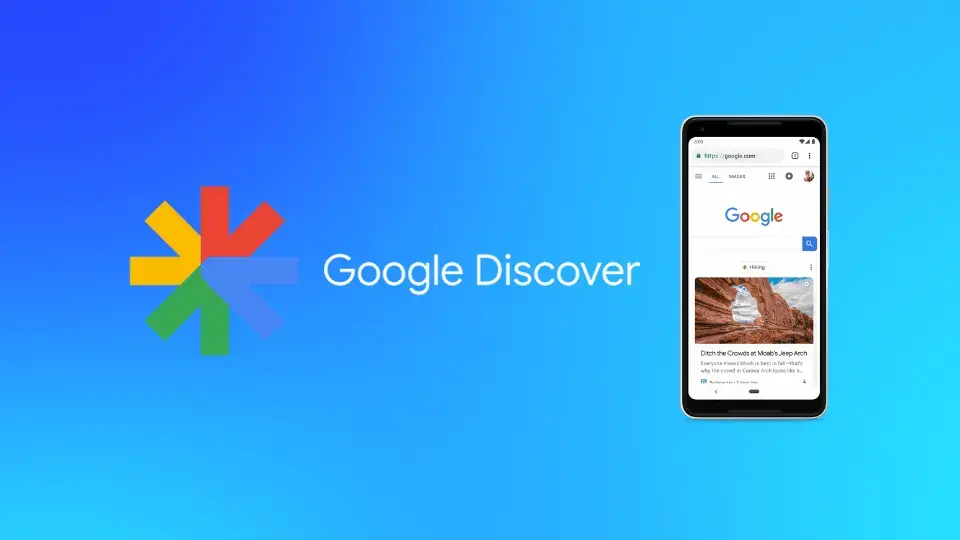
Google has begun rolling out AI-generated bullet-point summaries in Discover — its mobile-first content feed on Android and the Google app. These summaries appear above the article card, extracting key points from your content before users even click.
This marks a significant shift in how organic content is previewed and prioritised. Your first 2–3 sentences are now more than an introduction. They directly influence what gets summarised, how you appear in the feed and whether someone clicks at all.
For digital marketers, the implications are clear, with this digital marketing update bringing both opportunity and risk:
- Pre-click visibility is increasing: Articles now get more exposure in the feed through summaries, but if the AI preview satisfies user intent too early, it can reduce the chances of an actual click-through.
- Your intro now trains the AI: The Discover model looks for structure, clarity, and unique phrasing when deciding what to summarise. Weak intros with generic language are far less likely to earn quality previews.
- Messaging hierarchy matters more than ever: Marketers must balance early value delivery with curiosity. A compelling hook followed by layered information gives both the AI and the reader a reason to engage.
The Gurus’ take: When fewer clicks mean lost conversions
This is a double-edged update. Yes, it helps good content get seen, but it also shrinks the value of a click if users already get the answer in the summary. That’s a big deal for publishers, content marketers and anyone focused on top-of-funnel traffic.
We’re entering a phase where “format” matters as much as “topic.” The same content can perform differently in Discover based on how it’s structured in the intro. And in the context of ongoing digital marketing updates, this shift forces marketers to rethink their opening paragraph as both a hook and a data point for AI systems.
Your action plan: Optimise for AI summaries in Discover
Audit your top-performing pages in Discover: Use Google Search Console to track CTR changes after the rollout. Look for patterns in intro structure, tone and formatting to see what drives higher engagement.
Rework your article intros for AI summaries: Front-load your strongest insights or unique data. Use curiosity-driven opening lines and embed soft CTAs early. Keep the structure clean and scannable to guide what the model picks up.
Test and compare performance: Try A/B testing intro paragraphs on high-impact articles — one optimised for Discover summaries and one not — to see what resonates more with your audience.
4. June 2025 Core Update: Quality, authority, experience
Google’s June 2025 Core Update, released between June 1–15, continues the shift toward rewarding content built on real expertise and user value. This update reinforces Google’s evolving E-A-T framework (Expertise, Authoritativeness and Trustworthiness) and raises the bar for what’s considered high-quality content. This is especially true in competitive verticals like finance, health, legal, product reviews and educational video content.
Thin articles stuffed with keywords are no longer getting the benefit of the doubt. Pages that lack citations, show no editorial depth, or fail to offer original value are dropping in visibility. In contrast, long-form content that demonstrates real expertise now earns greater authority in the SERP.
Video creators can also see changes. Content that lives on its own without a transcript or supporting context now ranks lower than similar pieces embedded on pages with structured metadata, summaries or timestamps.
The Gurus’ take: Ranking now depends on what backs your claims
For those keeping up with digital or social media marketing updates, this rollout is a clear signal: ranking now relies less on volume and more on verified value. That means fact-checked content, expert sourcing and deeper formatting aren’t just “nice to have” but ranking signals. Brands that treat content as a growth asset, instead of just a placeholder for keywords, will win.
Your action plan: Strengthen content authority post-update
- Audit for depth and support: Identify pages that have plateaued or lost visibility. Focus on adding substance, which could be original insights, expert commentary or relevant stats that reinforce your authority.
- Structure for readability and trust: Break content into logical sections using H2s and H3s. Highlight credibility by linking to trusted sources or embedding a visual reference where it helps the reader understand the concept more clearly.
- Reinforce video content with context: Don’t publish standalone videos. Pair them with transcripts or how-to steps, and connect them to related articles. This creates a more complete experience, which is something Google is now clearly rewarding.
5. Hourly comparison in Search Console for real-time SEO monitoring
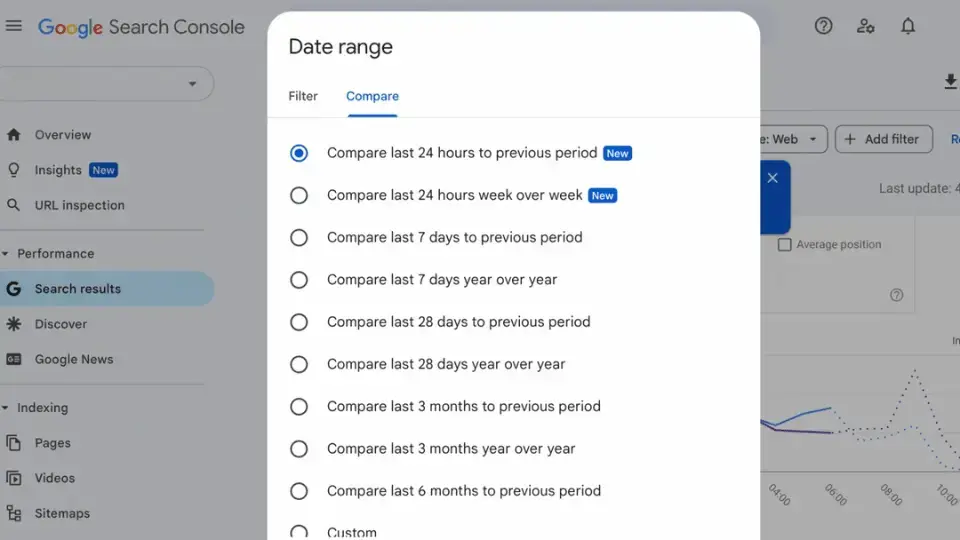
Google Search Console’s new hourly comparison feature is the kind of digital marketing update professionals have been asking for: real-time visibility into SEO performance. Unlike traditional daily data, this update allows users to break down traffic, impressions, and click-throughs by the hour — offering a high-resolution view into how your content is performing throughout the day.
This makes it significantly easier to diagnose indexing issues, measure campaign impact, and act on unexpected traffic changes as they happen. For time-sensitive brands, it’s no longer about “what happened yesterday,” but “what’s happening right now.”
Key use cases include:
- Tracking real-time campaign impact: Launching a PR campaign, email blast or Google Ads push? See how your organic search responds by the hour and adjust messaging or budgets while the campaign is still live.
- Spotting sitemap or indexing issues: If a new page isn’t getting impressions post-publish, hourly insights can help pinpoint delays in indexing or errors in your sitemap submission.
- Coordinating multi-channel efforts: Comparing performance with paid, social or referral traffic in real time allows teams to align efforts across marketing channels and amplify momentum during high-traffic windows.
Early adopters, especially ecommerce brands and publishers, are using this tool to respond within hours instead of waiting for daily or weekly reports. This prevents missed opportunities while allowing teams to proactively defend traffic drops before rankings dip further.
The Gurus’ take: daily SEO check-ins just became hourly
This is a major leap forward in operational SEO. The delay between action and insight has always slowed down marketing teams, especially during launches or site changes. With this tool, the guesswork is gone. If a technical issue tanks visibility or a campaign drives a surprise spike in interest, you’ll see it now, not tomorrow.
As digital marketing updates go, this one shifts how teams monitor success. It forces brands to think in smaller windows. Reviewing what works and what doesn’t as it happens is especially powerful when layered with tools like GA4, Hotjar or server logs.
Your action plan: integrate hourly SEO data into your workflow
- Add hourly checks to critical campaigns: Assign an SEO or performance team member to monitor Search Console’s hourly data during new launches, sales or product releases.
- Set comparison baselines: Use the tool to benchmark performance across different time blocks (e.g., morning vs. evening, pre-launch vs. post-launch), and map that against organic CTR or visibility.
- Cross-reference with other tools: Sync hourly GSC data with analytics dashboards (like GA4 or Looker Studio) to validate trends and act on outliers. This helps you connect organic fluctuations with external causes like downtime, paid campaigns, or media mentions.
6. YouTube adds title testing to Test & Compare
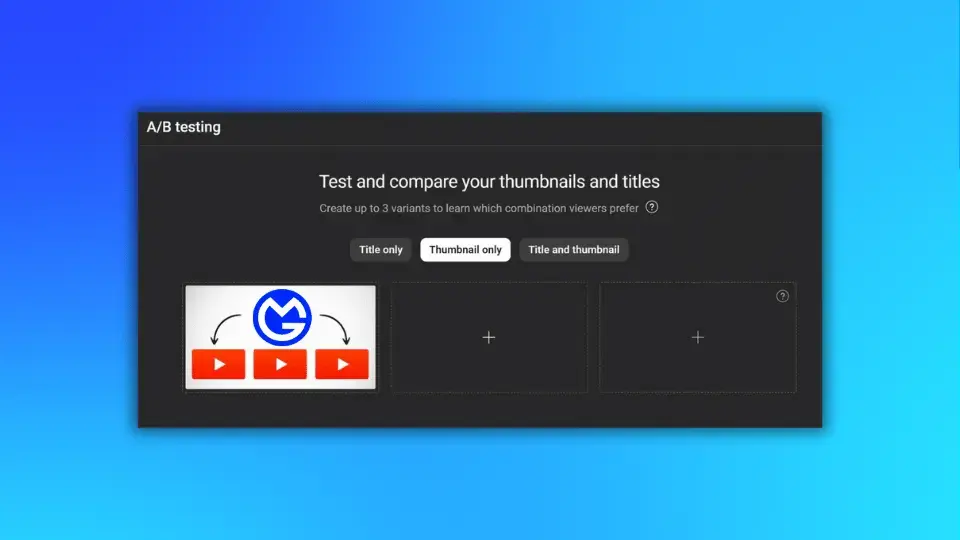
YouTube has expanded its Test & Compare beta tool, allowing creators to now A/B test video titles in addition to thumbnails. This means marketers and creators can run up to three combined variants per video. They can test different combinations of titles and thumbnails against one another in a real-world setting.
This update reflects YouTube’s deeper investment in performance-based content packaging, where CTR, engagement and retention metrics determine visibility in both Search and Suggested feeds. In a platform driven by click-worthiness and session duration, this level of control is a strategic digital marketing update.
The Gurus’ take: thumbnails and titles are now your first SEO layer
YouTube has become a search engine in its own right. That means your title and thumbnail act as both headline and hero image, and they directly influence discoverability. For performance-driven strategies, you can test value-led headlines against curiosity hooks, or compare colour-based thumbnails to those with faces.
This is particularly powerful for digital marketers running awareness campaigns, product spotlights or building brand authority via video. You’re optimising not just for engagement, but for discoverability across YouTube’s algorithmic surfaces.
Your action plan: run smarter YouTube experiments
- Start with your evergreen content: Pick 3–5 of your highest-traffic or most valuable videos and begin testing new title and thumbnail combinations. Focus on improving CTR without disrupting viewer expectations.
- Test themes, not just visuals: Use A/B tests to trial different messaging angles — e.g., urgency vs. value, curiosity vs. clarity — then roll the winning copy style into future uploads.
- Monitor downstream metrics: Don’t stop at CTR. Watch for how title/thumbnail changes impact average view duration, engagement rate and subscriber conversions. A successful test should improve retention as well as clicks.
7. Facebook limits replicated content
Facebook has introduced algorithm changes that limit the reach of replicated content. These are posts that reuse the same image, caption or creative without modification. The update is designed to protect creators and improve content diversity across feeds. This directly affects brands running multi-page or multi-region strategies. If your team is reposting the same asset without adding commentary, editing the caption or contextualising it for the audience, visibility will drop.
For teams using AI marketing tools to generate or distribute content across multiple platforms, this change reinforces the need for contextual relevance. Automation alone isn’t enough — even AI-assisted posts need a human layer of interpretation to maintain reach and engagement.
The Gurus’ take: Lazy reposting just became a liability
The days of cross-posting the same content to five pages and calling it a strategy are gone. Facebook’s signal now favours content that adds value: commentary, editorial framing or format-specific variation. Even internal reposts across your own brand pages require light reworking to avoid being deprioritised.
Think of this as a prompt to level up your storytelling. Use the same visual anchor across campaigns, but adapt the message to fit the moment, the audience or the channel’s context. A strong social media marketing update like this challenges marketers to combine automation with intentionality. Those who do will stand out in an increasingly filtered feed.
Your action plan: shift from reposting to reframing
- Audit your publishing cadence: Review recent organic posts across all brand or regional pages. Identify where replicated formats might be throttling your visibility and engagement.
- Create “context templates”: Build internal guidelines for how the same asset can be reframed per audience, channel or region. This can be through caption rewrites, added commentary or creative overlays.
- Turn repetition into iteration: Instead of reposting the same creative, build a content tree. One core visual becomes a testimonial, a behind-the-scenes, a how-to or a poll.
8. Meta Lead Ads no longer require CRM integration
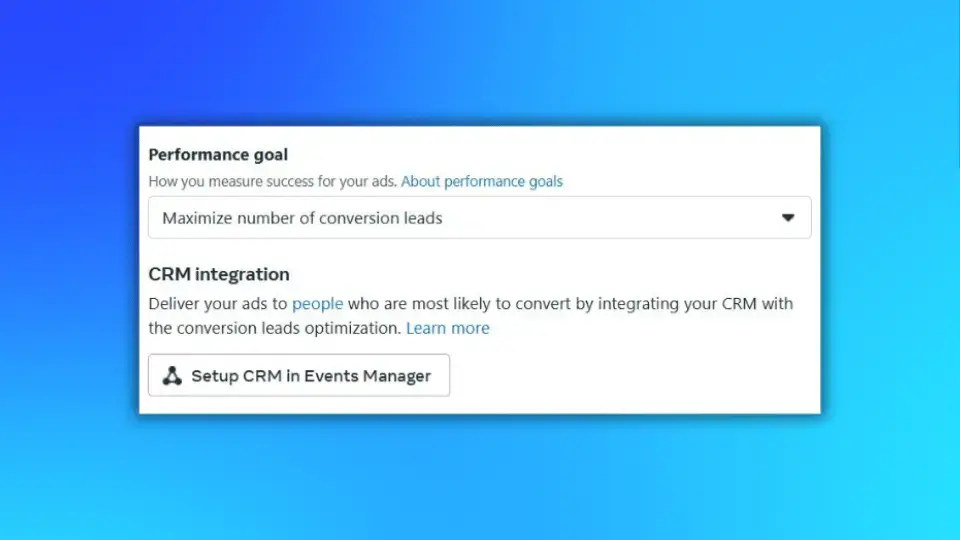
Meta has overhauled its Lead Ads format by removing the requirement to connect a CRM system. Instead, lead capture, scoring and basic conversion tracking can now be handled entirely within Ads Manager.
The biggest change? An AI marketing tool is now built in for lead filtering. Meta’s system automatically ranks leads based on behaviour, profile signals and interaction patterns. Teams can prioritise the most likely converters without ever exporting a CSV.
This is a game-changer for small businesses and lean teams. What once required a full CRM stack and technical setup is now a self-contained flow. Do everything from form submission to lead quality review, all without leaving the Meta ecosystem.
The Gurus’ take: lead gen without the tech debt
Meta’s baked-in lead scoring solves one of the biggest pain points in paid social campaigns: knowing which leads are worth your time. This makes performance marketing more accessible for local businesses, startups and brands without large CRM setups.
You still need a strong form strategy, though. AI scoring helps but it can’t rescue bad messaging, vague offers or irrelevant targeting.
Your action plan: smarter lead ads, no integrations needed
- Rework your lead forms: Focus on questions that signal high intent (e.g. budget, timeframes, service interest) to help the AI score more accurately.
- Monitor lead quality directly: Use Ads Manager’s new scoring metrics to compare campaigns. Kill off low-converting forms quickly.
- Test no-CRM flows for niche offers: Run micro-campaigns without CRM setup to validate new segments or lead magnets before scaling.
9. Google releases Creator Partnerships Hub in beta
Google has launched its Creator Partnerships Hub in beta. It’s a dedicated interface designed to streamline how brands manage collaborations with influencers across YouTube, Search and other Google properties.
It’s a response to the increasingly fragmented world of creator-brand partnerships, offering tools that support everything from onboarding to campaign measurement in one place.
Its features include:
- Contract repository and approval workflow: Brands and creators can upload, manage and approve campaign agreements directly within the platform, reducing reliance on scattered email threads or third-party contract tools.
- Performance tracking tied to custom campaign links: The Hub generates unique URLs per campaign or creator, making it easier to attribute traffic, conversions and engagement metrics back to individual partners.
- Metrics aligned with Search and YouTube success: Brands can view performance through the lens of Google’s own ecosystem. Surface data like SERP appearances, video views, watch time and Discover visibility, all of which are tied to a specific creator’s impact.
This beta release offers a glimpse into a more integrated approach to influencer marketing, particularly for brands investing heavily in multi-channel visibility and co-branded content strategies. It’s a digital marketing update that signals where brand-creator collaboration is heading next.
The Gurus’ take: Finally, influencer marketing meets real attribution
Until now, tracking ROI from influencer partnerships has been a patchwork job. Marketers had to cobble together UTM links, screenshots and guesswork to justify spend. Google’s Creator Partnerships Hub is a much-needed digital marketing update. It ties your influencer activity to tangible search, video and traffic outcomes — right within the platforms where your audience is already engaging.
For brands running cross-platform influencer campaigns, this offers a new level of clarity. You can see which creators are moving the needle, what channels are overperforming and where your budget is best spent.
Your action plan: integrating the Creator Hub into your strategy
- Audit current influencer campaigns: List the creators you’re working with and identify gaps in tracking or approval flows that could be streamlined using the Hub.
- Test campaign URLs: Start by generating Google-friendly tracking links within the Hub for upcoming creator promotions and compare their accuracy vs. your existing attribution methods.
- Bridge content performance with SEO and video: Use the Hub’s unified metrics to explore how creator-led videos rank on YouTube and how branded content appears in Discover or Search. This can influence not just partnership decisions but your broader content strategy.
Final thoughts: From update fatigue to strategic advantage
This week went from being busy to defining. AI marketing tools went from assistive to autonomous. Social media platforms sharpened their stance on content originality. And search, once a keyword game, is now a contest of structure, clarity and recency.
If there’s one thread running through these digital marketing updates, it’s this: platforms are optimising for users, not publishers. That means automation, formatting precision and cross-channel agility are no longer nice-to-haves. They’re the baseline.
SEO specialists, paid media managers and content leads alike now face the same reality. The brands that act now will lead, while others will chase visibility they used to own.
Work with the Gurus: Turn updates into growth
All of this might feel overwhelming — and that’s exactly where the right partner makes the difference. At Online Marketing Gurus, we help brands stay ahead of the curve, not behind it.
From embedding the latest AI marketing tools into your workflows to rebuilding content strategies for Discover and Deep Search visibility, we live and breathe digital transformation. Our specialists work across SEO, paid media and web design to get your campaigns ready for what’s next.
Want to see where you stand and how to grow from here? Get in touch to get a free digital audit. We’ll show you what’s working, what’s stalling and how to turn every digital marketing update into your competitive edge.

About the Author
Andrew Raso
Share